
TravelGuide
Chengdu & Chongqing Travel Gateway | Pandas, Hot Pot & Beyond
Chengdu & Chongqing Travel Gateway | Pandas, Hot Pot & Beyond
In the early morning alleys or late-night streets of Chengdu, there is always a wisp of spicy and fragrant aroma piercing through the daily hustle and bustle—that is the unique call of Dandan noodles. This civilian delicacy born on the streets has no gorgeous presentation, yet with its tender and chewy noodles, crispy and savory minced meat sauce (saozi), and richly layered seasonings, it has conquered the taste buds of countless people and become a flavor symbol carrying Bashu cultural memories. From the cries of vendors carrying shoulder poles wandering the streets to being ranked among the "Top Ten Famous Noodles in China", Chengdu Dandan noodles have written a legend about taste and inheritance over nearly 200 years.
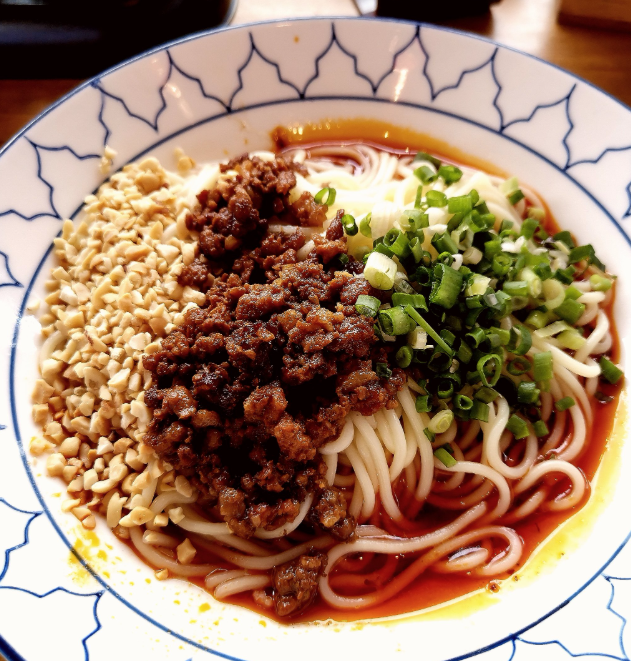
The name "Dandan noodles" derives from its original way of sale—vendors carried shoulder poles to peddle along the streets. One end of the pole held a stove, a copper pot, and firewood, while the other end contained noodles, seasonings, bowls, and chopsticks. The shout of "Dandan noodles here!" was once the most vivid footnote to the daily life of old Chengdu. Regarding its origin, there are two theories: one that it was created by Old Man Xu in Chengdu during the Qianlong period, and the other that it was invented by Chen Baobao, a vendor from Zigong during the Daoguang period. What is undeniable is that this delicacy finally took root and thrived in Chengdu, becoming a golden business card of Rongcheng's snacks.
According to legend, Old Man Xu and his daughter originally ran a noodle shop, which was destroyed by a fire at Wanfo Temple. Helplessly, they made a shoulder pole to sell noodles on the street, integrating the craftsmanship of golden silk noodles and silver silk noodles. With its delicious taste, it quickly became popular. Chen Baobao, a vendor from Zigong, had to switch to selling noodles with a shoulder pole due to a shoulder injury that prevented him from carrying brine. Drawing on the strengths of northern and southern noodles, he made noodles by hand and carefully prepared seasonings. His noodles spread throughout the Bashu region along with salt boats and salt-carrying poles, and finally entered Chengdu and took root. In the early days, Dandan noodles were a staple food for laborers—cheap and cooked to order. A bowl could dispel fatigue, and over time, it became the most popular daily delicacy on the streets and alleys.
After a century of evolution, Dandan noodles have moved from mobile stalls to formal restaurants, and even graced elegant occasions, becoming a common dish at Sichuan banquets. In 2013, it was selected into the first batch of "Top Ten Famous Noodles in China" by the Ministry of Commerce and the China Hotel Association. In 2011, the "Production Technique of Chengdu Dandan Noodles" was included in the list of Chengdu's intangible cultural heritage. This flavor originating from the streets has finally gained national recognition.
The essence of Chengdu Dandan noodles lies in the ultimate attention to every ordinary ingredient. Veteran chefs often say, "Choosing the right ingredients makes half the flavor." This seemingly simple principle runs through every link in the production of Dandan noodles—even a slight deviation will greatly affect the taste.
Noodles are the foundation of Dandan noodles. They must be thin round alkaline noodles with a diameter of about 1.5 millimeters. The alkaline dough is repeatedly kneaded, kneaded and rested three times, then rolled into paper-thin sheets and cut into hair-like strands. Such noodles are chewy and smooth, not easy to boil soft, and can firmly absorb the flavor of the seasonings. Senior chefs especially emphasize that noodles must be made fresh on the day. When pulled gently by hand, they should be elastic and not easy to break. Only then can they maintain a "soft yet firm" texture after cooking—a soul that machine-made noodles can hardly replicate.
The saozi (minced meat sauce) is the core of Dandan noodles' flavor. High-quality pork hind leg meat is selected, with a strict fat-to-lean ratio of 3:7, ensuring tight and non-greasy meat. It is hand-chopped into mung bean-sized particles instead of being minced by a machine. This way, the stir-fried minced meat is distinct in grains, can better stimulate the meat aroma, and tastes layered and tender. When stir-frying the saozi, first fry the fat to extract oil, then add the lean minced meat and stir-fry quickly over high heat. When the minced meat changes color, add minced ginger, minced garlic, and chopped Pixian Douban (Pixian broad bean paste), and stir-fry slowly for half an hour until bright red oil is extracted. The rich aroma of the Douban and the fresh aroma of the minced meat are completely integrated, and a bowl of golden, crispy and savory saozi is finally completed.
Seasonings are even more the "soul" of Dandan noodles. The combination of more than a dozen seasonings is like a taste symphony. The red oil should be boiled with Pixian Douban and Erjingtiao dried chili peppers, which are bright red in color and spicy but not dry. The prickly ash must be Hanyuan Dahongpao (Hanyuan big red robe prickly ash), plump in grains and rich in numbing aroma. The preserved vegetables should be Yibin preserved vegetables, salty, crispy and tender, adding a unique refreshing flavor to the noodles. The soy sauce should be brewed soy sauce, moderately salty and fresh, enhancing freshness without overwhelming other flavors. It is also paired with the sourness of Baoning vinegar, the slight sweetness of sugar, and the richness of mashed garlic. A variety of flavors balance and complement each other, finally forming a complex taste profile of "numbing, spicy, salty, fresh, and slightly sweet".
A bowl of authentic Chengdu Dandan noodles seems simple to make, but in fact, every step contains secrets. The control of heat and measure relies entirely on the experience and feel of senior chefs. A second more in heat or a spoon less in seasoning will make a world of difference in taste.
Cooking noodles is the foundation. Add a sufficient amount of water to the pot and bring it to a boil. Put in the thin round alkaline noodles and stir gently with chopsticks to prevent sticking. The cooking time must be precise—cook for 1 minute after the water boils again. Only then can the noodles be cooked through but still chewy, neither mushy nor sticky, and maintain a tender and elastic texture. A common mistake among novices is overcooking the noodles, causing them to lose their "texture". When absorbing the seasonings, the taste will be greatly reduced, just as senior chefs say: "Cooking noodles is like grasping measure—too long and you lose the original flavor."
Seasoning is the finishing touch, commonly known as "preparing the bowl base". Take a clean shallow porcelain bowl, add 3 spoons of red oil, 1 spoon of soy sauce, half a spoon of vinegar, a little prickly ash powder, and a pinch of sugar in proportion. Then add minced garlic and chopped green onions, stir well, and add a small amount of noodle cooking water to dilute the seasonings, making the taste softer. The biggest taboo in this step is unbalanced seasoning—too little prickly ash results in insufficient numbing aroma, while too much masks other flavors; too much vinegar overwhelms the other tastes, while too little fails to neutralize the richness of the spiciness. Only precise proportioning can create a richly layered base flavor.
Finally, fish out the cooked noodles and put them into the bowl, scoop a spoonful of stir-fried meat saozi and Yibin preserved vegetables, and sprinkle with a little chopped green onions and crushed peanuts. A bowl of authentic Chengdu Dandan noodles is finally done. The whole process is smooth and flowing, taking only a few minutes from cooking the noodles to seasoning, yet perfectly integrating the essence of heat, craftsmanship, and ingredients. This is the most touching daily charm of street food.
Tasting Chengdu Dandan noodles is a feast for the taste buds. As soon as it is served, the aroma of red oil wrapped in minced meat rushes to the nose. Lift a chopstick of noodles—every strand is evenly coated with seasonings. Put it in your mouth, the numbing taste hits the tip of the tongue first, followed by the spicy taste. The sauce aroma, meat aroma, and the crispy aroma of preserved vegetables interweave, salty, fresh, slightly sour, and richly layered, making people involuntarily tap their feet. In old Chengdu, people usually ate Dandan noodles in small portions—one tael (about 50 grams) per bowl, which could be finished in a few bites, and even the soup in the bowl would be drunk up. Therefore, it is also jokingly called "three-bite noodles", emphasizing taste over quantity. This is the unique charm of Dandan noodles.
In Chengdu, Dandan noodles have long transcended the category of food and become a symbol of life. Whether it is an early morning breakfast stall, a noon fast food restaurant, or a late-night snack street, you can see its figure. Regardless of the time or occasion, it connects people's emotions with the most authentic taste. In old Chengdu's noodle shops, the boss will enthusiastically ask, "Do you want more spice and numbing taste?" A bowl of noodles can dispel all fatigue. In modern restaurants, Dandan noodles still adhere to traditional craftsmanship, allowing every diner to taste the purest flavor of old Chengdu.
Today, Chengdu Dandan noodles have not only spread to major cities across China but also gone global. In Japan, it has been innovated into special versions such as teppanyaki and matcha jam, still popular among diners. In Chinese restaurants overseas, it is one of the most familiar Sichuan snacks to foreigners, becoming an important carrier for spreading Sichuan cuisine culture. From street shoulder poles to global dining tables, the taste of Dandan noodles has remained unchanged. It carries the optimism and love for life of Chengdu people, and hides the daily charm and chivalrous spirit of Shu land—life can be ordinary, but not plain; life can be busy, but not lacking in love.
If you ever have the chance to come to Chengdu, be sure to walk into the noodle shops in the streets and alleys and order a bowl of authentic Dandan noodles. Watch the boss skillfully cook the noodles and prepare the seasonings, feel the strongest daily charm of the city, and taste the century-old inheritance and Chengdu spirit hidden in the spicy and fragrant flavor. This bowl of noodles is not only about taste, but also about years, and even the deep-rooted love for life of Chengdu people.
Scan to open this page on your phone
 whatsapp
 Email: